


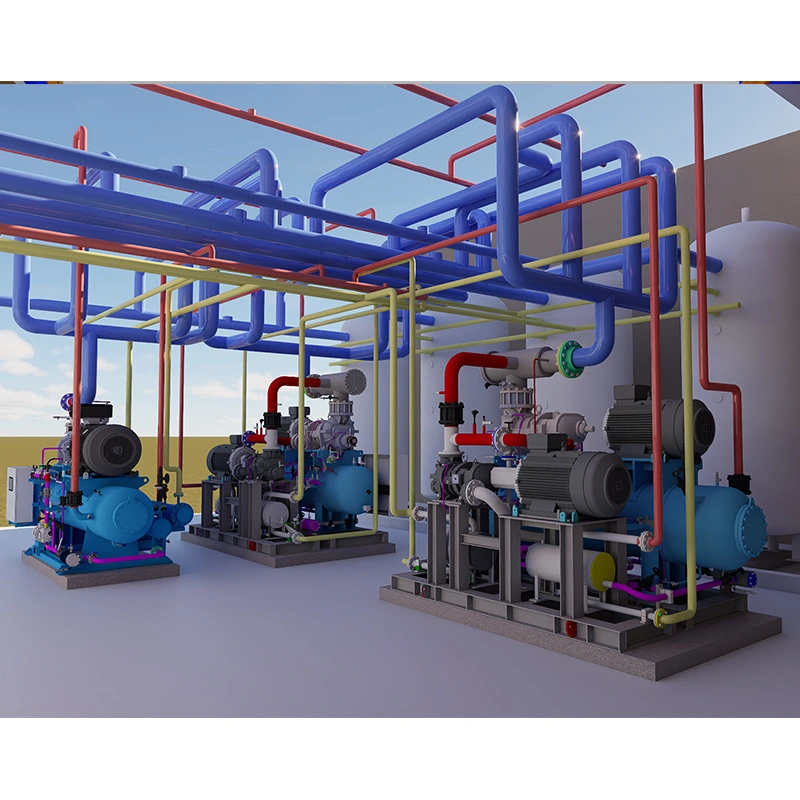
Introduction to Specialized Cold Storage for Fruit Storage
Specialized cold storage for fruit storage is the core infrastructure to maintain fruit freshness, extend the preservation period, and reduce post-harvest losses. Its design focuses on four key points: "precise temperature control, moisture retention and preservation, controlled atmosphere adaptation, and energy conservation and consumption reduction". Combined with the water content, respiratory intensity, freezing point and perishability of different fruits, it scientifically sets the storage temperature, humidity and gas composition, matches insulation panels of appropriate thickness, integrates intelligent monitoring, AI defrosting and controlled atmosphere (CA) preservation technologies, and strictly complies with the relevant standards of the Code for Design of Cold Storage (GB 50072) and the General Rules for Controlled Atmosphere Storage of Fruits and Vegetables (GB/T 21439). It is widely used in the entire industrial chain scenarios such as fruit planting bases, fruit and vegetable wholesale markets, fresh food processing enterprises, and chain supermarkets. It can realize partitioned and standardized storage of various fruits, maximize the retention of the natural flavor, nutritional value and commodity appearance of fruits, and avoid problems such as rot, dehydration and browning. In addition, our company can provide comprehensive customized cold storage design services according to customers' actual needs, site scale, types of stored fruits and turnover cycle, to create a more adaptable and customer-oriented specialized cold storage for fruit storage.
Core Design Logic
Precisely Adapt to Fruit Characteristics, Balance Preservation Effect and Energy Saving Needs
The freshness and commodity value of fruits directly depend on the stability of the temperature, humidity and gas environment in the cold storage. Unlike seafood cold storage which focuses on ultra-low temperature freezing, fruit cold storage takes "fresh-keeping storage" as the core, taking into account both short-term turnover and long-term storage needs. Most fruits are rich in water (60%-95%), with vigorous respiration, and are easily affected by temperature fluctuations, humidity changes and gas composition, resulting in dehydration, rot, poor taste and nutrient loss. Therefore, the design of fruit cold storage focuses on solving four core problems: "precise temperature and humidity control, inhibiting respiration, preventing browning and rot, and avoiding dehydration and weight loss". The selection of insulation panel thickness must strictly match the storage temperature of fruits. It not only effectively blocks the penetration of external heat, maintains a constant temperature and humidity environment in the warehouse, inhibits the respiratory intensity of fruits and the reproduction of microorganisms, but also balances operational energy consumption and construction costs. It avoids preservation failure and excessive energy consumption caused by insufficient insulation, or increased construction and operational costs caused by excessive insulation. Combined with the standards of the fruit refrigeration and preservation industry and actual operational experience, this article details the suitable storage conditions, insulation panel thickness and supporting intelligent systems for different fruits, ensuring that the content is in line with industry practices and meets the core needs of fruit storage.
key feature
Suitable Storage Temperature and Core Requirements for Different Types of Fruits
There are many types of fruits with significant differences in physical characteristics and preservation needs. Their storage temperature, humidity, gas composition and preservation period strictly comply with the relevant standards of the Code for Design of Cold Storage and the General Rules for Controlled Atmosphere Storage of Fruits and Vegetables. Combined with the maturity, picking season and storage cycle of fruits (short-term turnover: 1-7 days, medium-term storage: 1-3 months, long-term storage: 3-12 months), precise storage conditions are set according to categories to minimize post-harvest losses and retain the natural flavor and commodity value of fruits.
Pome fruits have thick peels, moderate water content, gentle respiration and strong storage resistance, but are prone to browning, softening of pulp and fading of flavor. The core of storage is "low temperature and constant temperature, low humidity and moisture retention, and moderate controlled atmosphere" to inhibit respiration and microbial reproduction.
• Apples (Red Fuji, Gala, etc.)
The optimal storage temperature is -1℃ to 1℃, the relative humidity (RH) is controlled at 85%-90%, and controlled atmosphere (CA) preservation (oxygen concentration 2%-5%, carbon dioxide concentration 3%-5%) can be used for long-term storage of 3-6 months. Before warehousing, pre-cooling treatment is required to quickly reduce the fruit temperature to about 0℃ to avoid condensation and rot caused by temperature fluctuations after warehousing; the warehouse is equipped with a gentle air circulation system to ensure uniform temperature and humidity, avoiding dehydration and browning caused by local high temperature or low humidity; regular ventilation is carried out to discharge ethylene gas accumulated in the warehouse (ethylene will accelerate fruit ripening and rot) and extend the preservation period.
• Pears (Duck Pears, Snow Pears, etc.)
The suitable storage temperature is 0℃ to 2℃, the relative humidity (RH) is 80%-85%, and during controlled atmosphere (CA) preservation, the oxygen concentration is 3%-6% and the carbon dioxide concentration is 2%-4%, which can be stored for 2-4 months. Pears are sensitive to humidity: excessive humidity is prone to mold growth, and insufficient humidity is prone to dehydration and wrinkling. The humidity in the warehouse needs to be precisely controlled; before warehousing, fruits without damage or pests and diseases should be selected to avoid rot spread caused by damaged fruits; the warehouse needs to be inspected regularly, and rotten fruits should be removed in time to prevent cross-contamination.
Stone fruits have thin peels, high water content, vigorous respiration, fast ripening speed, easy rot and browning, and poor storage resistance. The core of storage is "low temperature preservation, high humidity and moisture retention, and rapid pre-cooling" to inhibit ripening and rot.
• Peaches and Plums (Honey Peaches, Crisp Plums, etc.)
For short-term turnover (1-7 days), the suitable temperature is 0℃ to 1℃, and the relative humidity (RH) is 90%-95%; for medium and long-term storage (1-2 months), controlled atmosphere (CA) preservation is required, with a temperature of -0.5℃ to 0.5℃, oxygen concentration of 2%-4%, and carbon dioxide concentration of 1%-3%. Before warehousing, rapid pre-cooling is required (reduce the fruit temperature to 0℃ within 2-4 hours) to reduce respiratory consumption; use fresh-keeping boxes or breathable fresh-keeping bags for packaging to avoid extrusion damage and dehydration; the temperature and humidity fluctuation in the warehouse does not exceed ±0.5℃ to prevent fruit freezing or rot; regular ventilation is carried out to discharge ethylene gas and delay ripening.
• Cherries and Apricots
They have extremely poor storage resistance. For short-term turnover (1-3 days), the suitable temperature is -1℃ to 0℃, and the relative humidity (RH) is 90%-95%; for medium and long-term storage (1-2 weeks), ultra-low temperature preservation is required, with a temperature of -2℃ to -1℃, combined with a controlled atmosphere (CA) system (oxygen concentration 1%-3%, carbon dioxide concentration 2%-4%). Cherries and apricots have fragile peels and are prone to mechanical damage and freezing damage. They should be handled with care during warehousing and packed with shockproof fresh-keeping packaging; the warehouse is equipped with anti-frost equipment to avoid fruit damage caused by frost; regular inspections are carried out to timely handle rotten fruits and reduce losses.
Berry fruits have soft pulp, extremely high water content (85%-95%), thin peels, easy damage, rot and dehydration, and extremely vigorous respiration. They are the most difficult fruits to store. The core of storage is "ultra-low temperature preservation, high humidity and water locking, and sterile protection" to maximize the delay of rot and dehydration.
• Strawberries and Mulberries
They have extremely poor storage resistance and are only suitable for short-term turnover (1-2 days). The suitable temperature is 0℃ to 1℃, and the relative humidity (RH) is above 95%. They need to be packed in sterile fresh-keeping boxes to avoid extrusion and pollution; rapid pre-cooling is required before warehousing to remove field heat and reduce respiratory consumption; the warehouse needs to be kept clean and disinfected regularly to avoid mold growth; mixing with other fruits with peculiar smells is prohibited to prevent odor contamination.
• Blueberries and Grapes
For short-term turnover (3-7 days), the suitable temperature is -1℃ to 0℃, and the relative humidity (RH) is 90%-95%; for medium and long-term storage (1-3 months), controlled atmosphere (CA) + ultra-low temperature preservation is required, with a temperature of -2℃ to -1℃, oxygen concentration of 1%-2%, and carbon dioxide concentration of 3%-5%. Blueberries need to be packed in vacuum fresh-keeping packaging to prevent dehydration and oxidation; grapes need to retain their stems and be packed in breathable fresh-keeping bags to avoid fruit drop and rot; the warehouse is equipped with an efficient anti-frost system to avoid fruit damage caused by frost, and at the same time control the ethylene concentration to delay ripening and rot.
Citrus fruits have a waxy layer on the peel, strong storage resistance, moderate water content and gentle respiration, but are prone to peel wrinkling, rot and flavor fading. The core of storage is "low temperature and constant temperature, medium humidity and moisture retention, and ventilation" to inhibit mold reproduction and dehydration.
• Oranges and Tangerines
The optimal storage temperature is 3℃ to 5℃, the relative humidity (RH) is 80%-85%, and they can be stored for 2-3 months; using controlled atmosphere (CA) preservation (oxygen concentration 5%-8%, carbon dioxide concentration 2%-3%) can extend the storage period to 4-6 months. Before warehousing, they need to be cleaned and dried to remove surface moisture and avoid mold growth; use mesh bags or fresh-keeping boxes for packaging to avoid extrusion damage to the waxy layer of the peel; regular ventilation is carried out in the warehouse to discharge ethylene gas, maintain air circulation, and prevent peel wrinkling and rot.
• Grapefruits and Lemons
They have stronger storage resistance. The suitable temperature is 2℃ to 4℃, the relative humidity (RH) is 75%-80%, and they can be stored for 3-6 months. Grapefruits have thick peels and can be stored in bulk, but extrusion should be avoided; lemons need to be packed in breathable fresh-keeping bags to prevent dehydration and oxidation; the temperature and humidity in the warehouse need to be stable to avoid peel discoloration and rot caused by temperature fluctuations.
Tropical fruits are thermophilic and afraid of cold, sensitive to temperature, prone to freezing damage, vigorous respiration and fast ripening speed. The core of storage is "medium temperature preservation, moisture retention and ventilation, and temperature control to prevent cold damage" to avoid freezing damage and over-ripening.
• Bananas and Mangoes
The suitable storage temperature is 12℃ to 15℃, the relative humidity (RH) is 85%-90%, and they can be directly warehoused for short-term turnover (3-7 days); for medium and long-term storage (1-2 weeks), controlled atmosphere (CA) preservation is required (oxygen concentration 5%-7%, carbon dioxide concentration 1%-2%). Bananas and mangoes are extremely sensitive to low temperatures: temperatures below 10℃ are prone to freezing damage (blackened peel, soft and rotten pulp), so the temperature in the warehouse must be strictly controlled; before warehousing, fruits with 70%-80% maturity should be selected to avoid accelerated rot of over-ripe fruits; the warehouse needs to be ventilated to discharge ethylene gas and delay ripening.
• Durian and Dragon Fruit
The suitable temperature for durian is 15℃ to 18℃, the relative humidity (RH) is 80%-85%, and it can be stored for 1-2 weeks; the suitable temperature for dragon fruit is 10℃ to 12℃, the relative humidity (RH) is 85%-90%, and it can be stored for 2-3 weeks. Durian has a strong odor and needs to be stored in a separate partition to avoid odor contamination with other fruits; dragon fruit has a thick peel and can be stored in bulk or in fresh-keeping bags to avoid extrusion damage; the temperature in the warehouse needs to be kept stable to avoid fruit deterioration caused by fluctuations.
Summary
The core of specialized fruit storage cold storage is "precise temperature and humidity control, adaptation to fruit characteristics, and efficient energy-saving preservation". Combined with the standards of the fruit refrigeration and preservation industry and the actual needs of fruit storage, the differences in water content, respiratory intensity, freezing point and perishability of different fruits determine their exclusive storage temperature, humidity and gas environment. The thickness of insulation panels is the key to maintaining a constant temperature and humidity environment in the warehouse, reducing energy consumption and preventing condensation. The precise matching of the two can realize long-term safe storage of fruits, minimize post-harvest losses (controlled within 5%, in line with industry standards), and retain the natural flavor, nutritional components and commodity appearance of fruits.
This cold storage integrates an intelligent monitoring platform, an AI defrosting system, controlled atmosphere (CA) preservation technology and rapid pre-cooling technology, balancing practicality, energy saving and compliance. It is suitable for various scenarios such as fruit planting bases, fruit and vegetable wholesale markets, and fresh food processing enterprises, and can meet the storage needs of various fruits such as pome fruits, stone fruits, berries, citrus fruits and tropical fruits. At the same time, our company can provide customized design services according to customers' specific needs, including cold storage scale, partition layout, temperature and humidity control precision, refrigeration unit (RU) selection, controlled atmosphere (CA) system configuration, etc., fully adapting to customers' operational scenarios, escorting fruit freshness, helping the efficient operation of the fruit industrial chain, and conforming to the intelligent, energy-saving and professional development trend of the fruit refrigeration and preservation industry.