


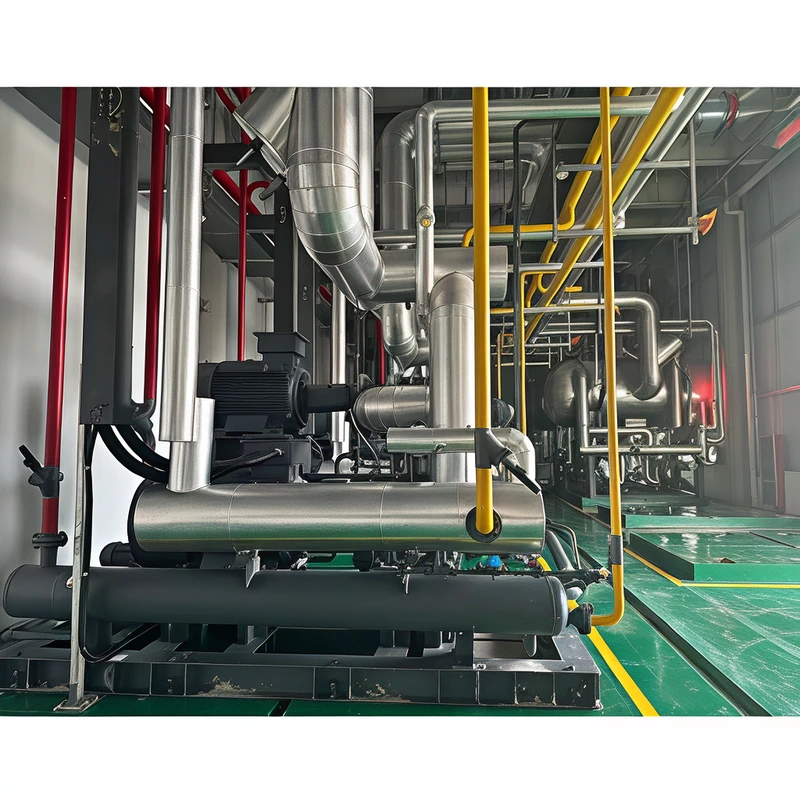
Introduction to Specialized Cold Storage for Vegetable Storage
Specialized cold storage for vegetable storage is the core infrastructure to ensure vegetable freshness, extend the preservation period, and reduce post-harvest losses. Its design focuses on three key aspects: "precision temperature control, constant humidity preservation, and energy conservation and consumption reduction". Combined with the water content, respiratory intensity, and low-temperature resistance of different vegetables, it scientifically sets temperature and humidity ranges, matches appropriately thick insulation panels, and integrates intelligent monitoring and AI defrosting technology, strictly complying with relevant standards of the fruit and vegetable refrigeration industry. It is widely used in the entire industrial chain, including vegetable planting bases, wholesale markets, supermarket distribution centers, and fruit and vegetable processing enterprises. It can realize partitioned and standardized storage of various types of vegetables such as leafy vegetables, root vegetables, melons and fruits, and edible fungi, maximizing the retention of the nutritional components, taste, and commodity value of vegetables. In addition, our company can provide comprehensive customized cold storage design services according to customers' actual needs, site scale, types of stored vegetables, and turnover cycle, creating specialized vegetable cold storage that is more adaptable and suitable for customers' operational scenarios.
Core Design Logic
Precise Adaptation of Temperature and Humidity, Balancing Preservation and Energy Saving
The preservation effect of vegetables directly depends on the stability of temperature and humidity in the cold storage. Different vegetables have significant differences in respiratory intensity and water content. Excessively high temperature will accelerate respiration, leading to wilting and rot of vegetables; excessively low temperature is prone to cause chilling injury and freezing injury, damaging cell structure; excessively high humidity is prone to mold growth, while excessively low humidity will cause vegetables to lose water and wilt. The selection of insulation panel thickness must strictly match the temperature and humidity requirements for vegetable storage. It should not only effectively block the penetration of external heat and humidity, maintain a constant temperature and humidity environment in the warehouse, and inhibit vegetable respiration and microbial reproduction, but also balance operational energy efficiency and construction economy. It avoids preservation failure and energy waste caused by insufficient insulation, or increased construction and operational costs caused by excessive insulation. Combining fruit and vegetable refrigeration industry standards and actual operational experience, this article details the suitable temperature and humidity for different vegetables, the thickness of insulation panels, and supporting intelligent systems, ensuring that the content is in line with industry practices and meets vegetable storage needs.
key feature
Suitable Storage Temperature, Humidity and Core Requirements for Different Types of Vegetables
There are many types of vegetables with great differences in physical and chemical properties. Their requirements for storage temperature, humidity, and preservation period strictly follow the relevant standards of the Code for Design of Fruit and Vegetable Cold Storage and the Technical Regulations for Vegetable Storage and Preservation. Combined with the origin, maturity, and turnover cycle of vegetables, precise storage conditions are set by category, taking into account both short-term turnover (1-7 days) and long-term storage (1-6 months) needs, to minimize post-harvest losses and retain the original taste and nutrition of vegetables.
Leafy vegetables have high water content (85%-95%), high respiratory intensity, tender leaves, and are prone to water loss, wilting, yellowing, and rot. They are extremely sensitive to changes in temperature and humidity, making them a category with high preservation difficulty in vegetable cold storage. They need to maintain a low-temperature and high-humidity environment throughout the process to inhibit respiration and water loss, while avoiding chilling injury.
• Common Leafy Vegetables (Spinach, Lettuce, Chard, etc.)
The optimal storage temperature is 0℃ to 2℃, and the humidity is controlled at 90%-95%. This temperature and humidity can be maintained for short-term turnover (1-3 days). For long-term storage (7-15 days), the temperature needs to be appropriately reduced to 0℃±0.5℃, which can effectively inhibit leaf yellowing and rot, and control the loss rate within 5%. Pre-cooling treatment is required before warehousing to quickly reduce the core temperature of vegetables to 0℃ to 2℃, avoiding temperature fluctuations in the warehouse after warehousing. At the same time, damaged and rotten leaves should be removed, and fresh-keeping bags should be used for sealed packaging to reduce water loss. The air flow rate in the warehouse is controlled at 0.2-0.3m/s to avoid leaf wilting caused by direct cold air blowing.
• Storage-Tolerant Leafy Vegetables (Celery, Cilantro, Chives, etc.)
The suitable temperature is 0℃ to 3℃, and the humidity is controlled at 85%-90%, which can be stored for 15-30 days. Among them, celery and cilantro can extend the preservation period through root moisturizing treatment (wrapped with wet gauze). Regular ventilation is required to discharge the accumulated carbon dioxide in the warehouse to avoid leaf rot due to lack of oxygen. During ventilation, the ventilation time and air speed should be controlled to prevent severe fluctuations in temperature and humidity in the warehouse.
Root vegetables have medium water content (70%-85%), low respiratory intensity, thick epidermis, and strong storage tolerance. They have relatively loose requirements for humidity. The key is to control temperature to avoid germination, rot, and hollowness, and prevent skin blackening and poor taste caused by chilling injury.
• Low-Temperature Tolerant Roots (Carrots, White Radishes, Beets, etc.)
The suitable temperature is 0℃ to 1℃, and the humidity is controlled at 80%-85%, which can be stored for 2-4 months. During storage, regular inspections are required to remove germinated and rotten individuals to avoid cross-contamination. Carrots and white radishes should not be stored in the same warehouse as apples and pears, to prevent ethylene released by apples and pears from accelerating the germination and hollowness of root vegetables.
• Medium-Temperature Roots (Potatoes, Onions, Garlic, etc.)
The suitable temperature is 3℃ to 5℃, and the humidity is controlled at 70%-75%, which can be stored for 3-6 months. Among them, potatoes should avoid light to prevent the skin from turning green and producing solanine. Onions and garlic need to be kept dry to avoid mold caused by humidity. They should be dried before warehousing to reduce surface moisture and extend the preservation period. A ventilation system should be installed in the warehouse to maintain air circulation and inhibit mold growth.
Melons and fruits have high water content (80%-90%), medium respiratory intensity, thin peel, and are prone to chilling injury and mechanical damage. Some categories have large differences in maturity, so the storage temperature needs to be adjusted according to maturity to avoid over-ripening, rot, or uneven ripening. At the same time, humidity should be controlled to prevent peel wrinkling and rot.
• Thermophilic Melons and Fruits (Cucumbers, Tomatoes, Eggplants, etc.): The suitable temperature is 8℃ to 12℃, and the humidity is controlled at 85%-90%, which can be stored for 7-15 days. Such vegetables are sensitive to low temperatures. Temperatures below 5℃ are prone to cause chilling injury, leading to peel depression, discoloration, and rot. Before warehousing, individuals with consistent maturity should be selected to avoid the spread of rot caused by large differences in maturity. Foam boxes should be used for packaging to reduce mechanical damage. The temperature and humidity fluctuations in the warehouse are controlled within ±1℃ and ±5%.
• Low-Temperature Tolerant Melons and Fruits (Peppers, Winter Melons, Pumpkins, etc.): The suitable temperature is 5℃ to 8℃, and the humidity is controlled at 80%-85%, which can be stored for 15-30 days. Among them, winter melons and pumpkins can reduce water loss and extend the preservation period through surface waxing treatment. Peppers should avoid extrusion to prevent peel damage. Regular ventilation is required during storage to discharge ethylene gas in the warehouse and inhibit over-ripening and rot.
Edible fungi have high water content (85%-90%), tender texture, no epidermal protection, and are prone to water loss, wilting, and mold. They have high respiratory intensity and strict requirements for temperature and humidity. They need to maintain a low-temperature and high-humidity environment, while avoiding excessive ventilation leading to water loss and mold growth.
• Common Edible Fungi (Shiitake Mushrooms, Oyster Mushrooms, King Oyster Mushrooms, etc.)
The suitable temperature is 0℃ to 2℃, and the humidity is controlled at 90%-95%, which can be stored for 7-10 days. Fresh-keeping boxes or plastic wrap should be used for sealed packaging to reduce water loss and avoid damage to the mushroom cap caused by extrusion. The air flow rate in the warehouse is controlled at 0.1-0.2m/s. Regular ventilation is required (1-2 times a day, 15-20 minutes each time) to discharge carbon dioxide and inhibit mold growth. During ventilation, the ventilation air should be preheated in advance to avoid temperature fluctuations in the warehouse.
• Tender Edible Fungi (Enoki Mushrooms, Shimeji Mushrooms, etc.)
The suitable temperature is 0℃±0.5℃, and the humidity is controlled at about 95%, which can be stored for 5-7 days. Special fresh-keeping bags should be used for packaging, and absorbent paper should be placed in the bags to absorb excess water and avoid mushroom rot. Frequent opening and closing of the cold storage door should be avoided during storage to reduce temperature and humidity fluctuations, and the loss rate should be controlled within 3%.
Summary
The core of specialized vegetable storage cold storage is "precise adaptation of temperature and humidity, stable thermal insulation and moisture retention, and energy conservation and consumption reduction". Combined with the fruit and vegetable refrigeration industry standards and the actual needs of vegetable storage, the differences in water content and respiratory intensity of different vegetables determine their exclusive storage temperature and humidity ranges. The thickness of insulation panels is the key to maintaining a constant temperature and humidity environment in the warehouse and reducing energy consumption. The precise matching of the two can realize long-term safe storage of vegetables, minimize post-harvest losses, and retain the nutrition and commodity value of vegetables. This cold storage integrates an intelligent monitoring platform and an AI intelligent defrosting system, balancing practicality, energy saving, and compliance. It is suitable for various scenarios such as vegetable planting bases, wholesale markets, and supermarket distribution centers, and can meet the storage needs of various vegetables such as leafy vegetables, root vegetables, melons and fruits, and edible fungi. At the same time, our company can provide customized design services according to customers' specific needs, including cold storage scale, partition layout, temperature and humidity control precision, and refrigeration unit selection, fully adapting to customers' operational scenarios, escorting vegetable freshness, and helping the efficient operation of the vegetable industrial chain, in line with the intelligent, energy-saving, and professional development trend of the fruit and vegetable refrigeration industry.