


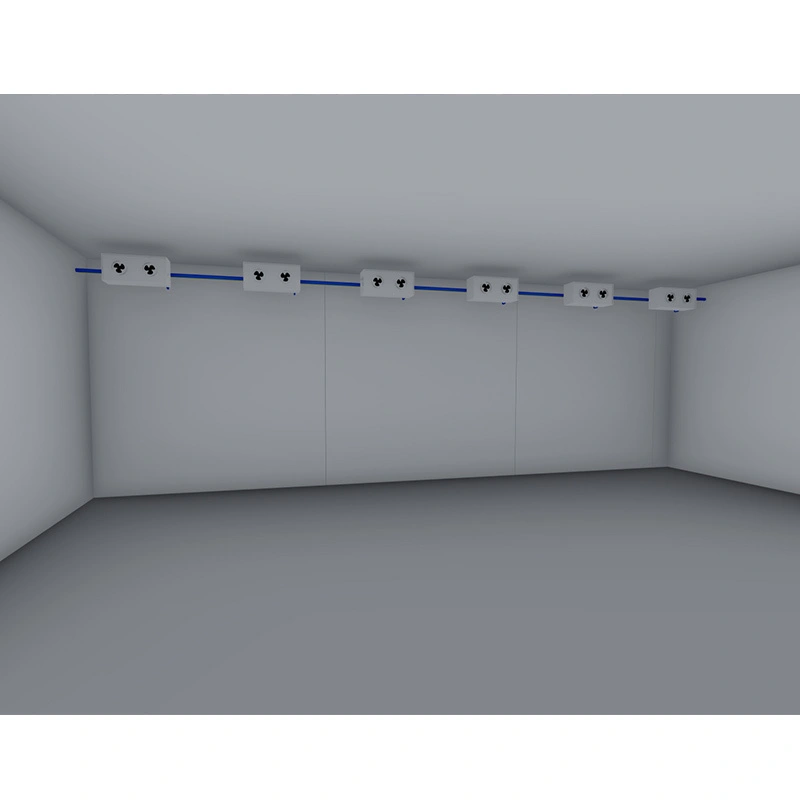
Introduction to Specialized Cold Storage for Seafood Storage
Specialized cold storage for seafood storage is the core infrastructure to maintain seafood freshness, retain its nutritional value, and reduce post-harvest losses. Its design focuses on three key aspects: "ultra-low temperature control, stable freezing effect, and energy conservation and consumption reduction". Combined with the water content, freezing point, and perishability of different seafood, it scientifically sets freezing and storage temperature ranges, matches insulation panels of appropriate thickness, and integrates intelligent monitoring, AI defrosting, and quick freezing technologies, strictly complying with relevant standards of the seafood refrigeration industry. It is widely used in the entire industrial chain, including seafood fishing bases, aquatic product wholesale markets, seafood processing enterprises, and catering distribution centers. It can realize partitioned and standardized storage of various types of seafood such as fish, shrimp, shellfish, and crustaceans, maximizing the retention of the fresh and tender taste and nutritional components of seafood and avoiding thawing and spoilage. In addition, our company can provide comprehensive customized cold storage design services according to customers' actual needs, site scale, types of stored seafood, and turnover cycle, creating specialized seafood cold storage that is more adaptable and suitable for customers' operational scenarios.
Core Design Logic
Precise Low-Temperature Adaptation, Balancing Freshness Preservation and Energy Saving
The freshness and quality of seafood directly depend on the stability of the temperature in the cold storage and the scientificity of the freezing process. Unlike vegetables and medicines, seafood has an extremely high water content (75%-90%), tender muscle fibers, and is rich in protein and unsaturated fatty acids, making it highly susceptible to spoilage, poor taste, and even the production of harmful substances due to temperature fluctuations and repeated freezing and thawing. Therefore, the design of seafood cold storage focuses on solving four key issues: "quick freshness locking, constant temperature freezing, anti-thawing, and anti-odor mixing". The selection of insulation panel thickness must strictly match the freezing and storage temperature of seafood—it not only effectively blocks the penetration of external heat, maintains a stable ultra-low temperature environment in the warehouse, and inhibits microbial reproduction and oxidation of seafood components, but also balances operational energy efficiency and construction economy. This avoids freezing failure and energy waste caused by insufficient insulation, as well as increased construction and operational costs due to excessive insulation. Combining seafood refrigeration industry standards and practical operational experience, this article details the suitable temperatures for different seafood, insulation panel thicknesses, and supporting intelligent systems, ensuring the content aligns with industry practices and meets the core needs of seafood storage.
key feature
Suitable Storage Temperature and Core Requirements for Different Types of Seafood
There are many types of seafood with significant differences in physical and chemical properties. Their requirements for freezing, storage temperature, and preservation period strictly follow the relevant standards of the Code for Design of Cold Storage and the Good Operating Practices for Aquatic Product Freezing and Refrigeration. Combined with the fishing method, freshness, processing technology, and turnover cycle of seafood, precise freezing and storage conditions are set by category, taking into account both short-term turnover (1-7 days) and long-term storage (1-12 months) needs, to minimize post-harvest losses and retain the original fresh and tender taste and nutrition of seafood.
Fish have high water content and fragile muscle fibers, making them extremely prone to spoilage. Additionally, different fish have significant differences in their freezing points, so freezing and storage must accurately control temperature based on their characteristics. This prevents damage to the fish meat, preserves nutritional components, and avoids dry, stringy texture and water loss after thawing.
• Common Marine Fish (Hairtail, Croaker, Spanish Mackerel, etc.)
The optimal freezing temperature ranges from -18℃ to -20℃, with a stable storage temperature of -18℃±1℃, allowing for storage periods of 3-6 months. Before warehousing, quick freezing treatment is required to lower the core temperature of the fish meat to below -18℃ within 2 hours—this locks in the fish’s moisture and nutrients, preventing ice crystal formation from damaging muscle fibers. Sealed fresh-keeping bags or vacuum packaging are used to prevent odor mixing and water loss, while the air flow rate in the warehouse is controlled at 0.2-0.3m/s to avoid thawing and refreezing caused by local temperature fluctuations.
• High-End Marine Fish (Salmon, Cod, Tuna, etc.)
These fish have extremely high temperature requirements, with an optimal freezing temperature of -25℃ to -30℃ and a storage temperature fluctuation of no more than ±0.5℃, enabling storage for 6-12 months. Ultra-low temperature quick freezing technology (liquid nitrogen freezing or air-cooled quick freezing) is required to reduce the core temperature of the fish meat to -30℃ within 1 hour, maximizing the retention of its fresh, tender taste and unsaturated fatty acids. During storage, frequent opening and closing of the cold storage door should be avoided to prevent temperature fluctuations; independent sealed packaging is used to prevent odor mixing, and the condition of the fish meat should be checked regularly to promptly remove any spoiled individuals.
• Freshwater Fish (Carp, Grass Carp, Crucian Carp, etc.)
The suitable freezing temperature is -15℃ to -18℃, which can be stored for 2-4 months. Freshwater fish have a strong fishy smell and need to be stored in separate partitions. Before warehousing, the internal organs should be removed and cleaned, and sealed packaging should be used. The warehouse should be equipped with a deodorizing device to regularly ventilate and exhaust odors and carbon dioxide, avoiding the fish meat from absorbing odors. At the same time, the humidity in the warehouse is controlled at 60%-70% to prevent frost accumulation.
Shrimp have tender meat, high water content, and thin shells, making them highly susceptible to thawing and spoilage due to temperature fluctuations. They are also prone to black heads and shelling, so the core of their storage lies in "quick freezing, constant temperature freshness locking, and anti-oxidation".
• Fresh Frozen Shrimp (Prawns, Chinese Shrimp, etc.)
The optimal freezing temperature is -20℃ to -22℃, with a stable storage temperature of -20℃±1℃, allowing for storage periods of 4-8 months. Before warehousing, the shrimp need to be cleaned and graded, and individual quick freezing technology (freezing each shrimp separately) is adopted to avoid adhesion. After freezing, vacuum packaging is used to prevent oxidation and water loss, as well as black heads and shelling. The warehouse is equipped with anti-frost devices to regularly remove frost, preventing frost accumulation from affecting refrigeration efficiency and avoiding frostbite on the shrimp.
• Crayfish (Fresh Frozen, Cooked Frozen)
The suitable temperature for fresh frozen crayfish is -18℃ to -20℃, which can be stored for 3-6 months; the suitable temperature for cooked frozen crayfish is -15℃ to -18℃, which can be stored for 2-3 months. Fresh crayfish need to be cleaned and the shrimp intestines removed before warehousing. Cooked crayfish need to be cooled to room temperature before warehousing to avoid temperature fluctuations in the warehouse. Both are packaged in sealed packaging and stored in separate partitions to prevent odor mixing. The humidity in the warehouse is controlled at 65%-75% to avoid dryness and shelling of the shrimp.
Most shellfish are shelled seafood, and their shells provide a certain degree of protection. However, their internal meat is tender and high in water content, making them prone to death and spoilage due to oxygen deficiency and temperature fluctuations. Thus, the core of shellfish storage is "low-temperature freshness preservation, appropriate ventilation, and anti-oxygen deficiency".
• Fresh Shellfish (Scallops, Oysters, Clams, etc.)
The suitable storage temperature is 0℃ to 2℃, with humidity controlled at 90%-95%, allowing for short-term turnover of 3-7 days. A wet-keeping preservation mode is adopted, with regular water changes to ensure adequate oxygen supply for the shellfish and prevent death from oxygen deficiency. They are stored in separate partitions to avoid shell damage caused by extrusion, and the air flow rate in the warehouse is controlled at 0.1-0.2m/s to prevent dehydration and death of the shellfish from direct cold air blowing.
• Frozen Shellfish (Shelled Meat, Frozen Shelled Shellfish)
The suitable freezing temperature is -18℃ to -20℃, which can be stored for 6-8 months. Shelled meat needs to be quickly frozen to a core temperature below -18℃ and packaged in vacuum to prevent oxidation and water loss. Frozen shelled shellfish need to be cleaned and drained before freezing to avoid adhesion due to shell freezing. The temperature in the warehouse is stable at -18℃±1℃ to avoid spoilage and poor taste of the shellfish meat caused by thawing and refreezing.
Crustacean seafood (crabs, lobsters) have plump meat and are rich in protein. In their fresh state, they have extremely high requirements for temperature and humidity; after freezing, they are prone to dry, stringy meat and loss of crab roe or shrimp roe. Therefore, the core of crustacean storage is "precise temperature control, moisture retention and freshness locking, and anti-extrusion".
• Fresh Crustaceans (Hairy Crabs, Swimming Crabs, Lobsters, etc.)
The suitable storage temperature is 0℃ to 1℃, with humidity controlled at 90%-95%, allowing for short-term turnover of 1-3 days. They are stored in layers to avoid limb damage and loss of crab roe or shrimp roe caused by extrusion. Water is sprayed regularly to keep them moist, adequate ventilation is ensured to prevent death from oxygen deficiency, and they are stored in separate partitions to avoid odor mixing. The temperature fluctuation in the warehouse does not exceed ±0.5℃ to prevent frostbite or spoilage due to high temperatures.
• Frozen Crustaceans (Frozen Crabs, Frozen Lobsters)
The suitable freezing temperature is -20℃ to -25℃, which can be stored for 4-6 months. Before freezing, they need to be cleaned and tied to avoid limb loss after freezing. Quick freezing technology is adopted to reduce the core temperature to below -20℃ within 2 hours, locking the water and nutrition of the meat. Vacuum packaging is used and stored in separate partitions to avoid odor mixing and extrusion. The warehouse is regularly defrosted to prevent frost accumulation from affecting the refrigeration effect.
Summary
The core of specialized seafood storage cold storage lies in "ultra-low temperature precise control, stable insulation and frost prevention, and energy conservation and consumption reduction". Combined with seafood refrigeration industry standards and actual seafood storage needs, the differences in water content, freezing points, and perishability of different seafood determine their exclusive freezing and storage temperature ranges. Insulation panel thickness is key to maintaining a stable ultra-low temperature environment in the warehouse, reducing energy consumption, and preventing frost. The precise matching of these two factors enables long-term safe storage of seafood, minimizes post-harvest losses (controlled within 3%, in line with industry standards), and preserves seafood’s nutrients and fresh, tender taste.
This cold storage integrates an intelligent monitoring platform, an AI intelligent defrosting system, and quick freezing technology, balancing practicality, energy efficiency, and compliance. It is suitable for various scenarios, including seafood fishing bases, aquatic product wholesale markets, and seafood processing enterprises, and can meet the storage needs of various seafood types such as fish, shrimp, shellfish, and crustaceans. Additionally, our company can provide customized design services based on customers’ specific needs, including cold storage scale, partition layout, temperature control precision, refrigeration unit selection, and quick freezing equipment configuration—fully adapting to customers’ operational scenarios, safeguarding seafood freshness, and supporting the efficient operation of the seafood industrial chain. This aligns with the intelligent, energy-saving, and professional development trends of the seafood refrigeration industry.