


Introduction to Specialized Cold Storage for Pharmaceutical Storage
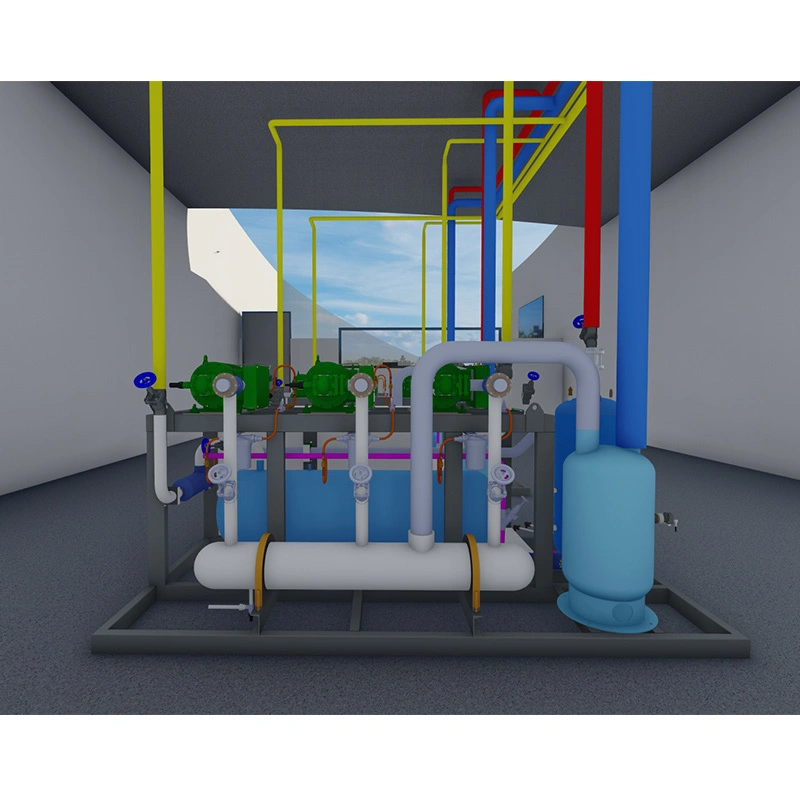
Specialized cold storage for pharmaceutical storage is a core infrastructure to ensure pharmaceutical quality, extend shelf life, and guarantee medication safety. Its design focuses on three key aspects: "precision temperature control, stable thermal insulation, and safety compliance". Combined with the physical and chemical properties and storage requirements of different pharmaceuticals, it scientifically sets temperature ranges and matches appropriately thick thermal insulation panels. At the same time, it integrates intelligent monitoring and AI defrosting technology, strictly complying with relevant standards and specifications of the pharmaceutical industry. It is widely used in the entire pharmaceutical industrial chain, including pharmaceutical manufacturers, pharmaceutical wholesale, chain pharmacies, and medical institutions. It can realize partitioned and standardized storage of biological products, chemical drugs, proprietary Chinese medicines, vaccines, and other types of pharmaceuticals, eliminating the risk of pharmaceutical deterioration and invalidation from the source. In addition, our company can provide comprehensive customized cold storage design services according to customers' actual needs, site scale, pharmaceutical storage types, and compliance requirements, creating specialized pharmaceutical cold storage that is more adaptable and suitable for customers' operational scenarios.
Core Design Logic
Precise Matching of Temperature and Thermal Insulation, Balancing Safety and Compliance
The quality stability of pharmaceuticals is much more sensitive to temperature and humidity than ordinary items. Excessively high, excessively low, or fluctuating temperatures can lead to degradation of pharmaceutical components, reduced efficacy, and even the production of toxic and harmful substances. The selection of thermal insulation panel thickness must strictly match the pharmaceutical storage temperature, not only to effectively block the penetration of external heat and humidity and maintain a constant temperature and humidity environment in the warehouse, but also to balance operational energy efficiency and compliance. It avoids pharmaceutical invalidation and energy waste caused by insufficient insulation, or increased construction and operational costs caused by excessive insulation. Combining pharmaceutical refrigeration industry standards and actual operational experience, this article details the suitable temperatures for different pharmaceuticals, the thickness of thermal insulation panels, and supporting intelligent systems, ensuring that the content is in line with industry practices and meets pharmaceutical storage compliance requirements.
key feature
Suitable Storage Temperatures and Core Requirements for Different Types of Pharmaceuticals
There are significant differences in the physical and chemical properties of different types of pharmaceuticals. Their requirements for storage temperature and humidity strictly follow the relevant standards of the Pharmacopoeia of the People's Republic of China and the Good Supply Practice for Pharmaceutical Products (GSP). Combined with the shelf life of pharmaceuticals and the transportation and storage cycle, precise storage conditions are set by category, taking into account both short-term turnover and long-term storage needs to maximize the protection of pharmaceutical efficacy and safety.
Biological products (such as insulin, vaccines, and monoclonal antibodies) have complex components, mostly proteins and peptides, which are extremely sensitive to temperature and prone to denaturation and invalidation due to temperature fluctuations. They are the most strictly required category in pharmaceutical cold storage, requiring constant low temperature throughout the process, while controlling the humidity in the warehouse to avoid mold and contamination. High-precision temperature and humidity control equipment must be configured in the warehouse to ensure stable environmental parameters.
• Vaccines
Divided into inactivated vaccines and live attenuated vaccines, the optimal storage temperature is 2℃ to 8℃. This temperature range can effectively inhibit the degradation of vaccine components, ensure vaccine titer, and enable safe storage for 6-12 months (specifically in accordance with the vaccine instructions). It should be noted that the temperature fluctuation in the warehouse must be strictly controlled within ±0.5℃, and the humidity should be controlled at 45%-65%. Direct sunlight and severe vibration should be avoided. At the same time, special cold chain monitoring equipment must be equipped to realize full-process traceability of temperature data, complying with the national standards for vaccine storage and transportation management. Anti-ultraviolet facilities should be installed in the warehouse to eliminate the impact of light.
• Insulin and Biologics
The conventional storage temperature is 2℃ to 8℃. For short-term (1-2 weeks) carrying, it can be placed in a cool environment below 25℃. For long-term storage, the constant temperature of 2℃ to 8℃ must be strictly maintained. Some special biologics (such as long-acting insulin and biological protein preparations) need to be stored in a low-temperature warehouse at -20℃ to -10℃, with a storage period of 12-24 months. A special low-temperature storage unit must be adopted, equipped with an anti-freeze-thaw control system to avoid component denaturation caused by repeated freezing and thawing.
The stability of chemical drugs (such as antibiotics, antihypertensive drugs, and anti-tumor drugs) varies greatly. Most of them need to be stored in a cool or refrigerated environment. For some volatile and decomposable drugs, low-temperature storage is required. Temperature control must balance efficacy retention and component stability to avoid drug decomposition and invalidation due to excessively high temperatures. Corresponding temperature and humidity control modules should be configured in the warehouse according to the characteristics of the drugs.
• Conventional Chemical Preparations
Such as oral antibiotics, antihypertensive drugs, and cold medicines, the suitable storage temperature is 0℃ to 20℃ (cool warehouse standard), with a storage period of 12-24 months. The humidity in the warehouse is controlled at 45%-75% to avoid moisture absorption and caking of drugs due to humidity. Some easily oxidized and decomposable preparations (such as vitamins and nitrates) need to be stored in a refrigerated warehouse at 2℃ to 8℃ to reduce component oxidation and extend the shelf life.
• APIs and Anti-tumor Drugs
Most API are in powder form, prone to moisture absorption and decomposition, with a suitable temperature of 2℃ to 8℃ and a humidity of 40%-60%, with a storage period of 18-24 months. Anti-tumor drugs (such as chemotherapy drugs) are mostly cytotoxic drugs, which need to be stored in a refrigerated warehouse at 2℃ to 8℃. Some need to be stored at -20℃ low temperature to avoid increased drug toxicity or reduced efficacy. They must be stored in separate partitions, equipped with special protective facilities and ventilation systems to prevent cross-contamination.
Proprietary Chinese medicines have components mostly extracted from plant and animal medicinal materials, which are prone to moisture absorption, mold, and insect infestation. The requirement for humidity control is higher than that for temperature. Temperature control is mainly cool and dry to avoid drug deterioration and efficacy loss due to high temperature and humidity. Efficient dehumidification equipment must be configured in the warehouse to regularly monitor humidity changes and make timely adjustments.
• Proprietary Chinese Medicine Preparations
Such as tablets, capsules, and oral liquids, the suitable storage temperature is 0℃ to 20℃ (cool warehouse), with a humidity of 45%-65% and a storage period of 12-36 months. Direct sunlight and high-temperature and high-humidity environments should be avoided to prevent drug discoloration, adhesion, and invalidation. Some proprietary Chinese medicines containing volatile components (such as Huoxiang Zhengqi Water and peppermint preparations) need to be stored at 2℃ to 8℃ to reduce component volatilization.
• Chinese Medicinal Decoction Pieces
The suitable storage temperature is 0℃ to 20℃, with a humidity of 40%-60% and a storage period of 6-18 months. Regular ventilation and dehumidification are required, equipped with insect-proof and mold-proof facilities to avoid mold and insect infestation. Some precious Chinese medicinal decoction pieces (such as ginseng, antler, and cordyceps sinensis) need to be stored in a refrigerated warehouse at 2℃ to 8℃, and independent sealed storage units can be set in the warehouse to ensure the quality of the medicinal materials.
Specially controlled drugs must strictly follow the relevant national management regulations. In addition to meeting temperature and humidity requirements, they must also have anti-theft, anti-loss, and traceability functions. The storage environment must be independent and airtight, with full-process monitoring.
• Narcotics and Class I Psychotropic Drugs
The suitable storage temperature is 0℃ to 20℃, with a humidity of 45%-65%. They must be stored in a special safe or independent airtight warehouse. The warehouse is equipped with monitoring and alarm systems, and temperature and humidity data are recorded in real time. The storage period is implemented according to the drug shelf life, and the inbound and outbound registration system is strictly implemented.
• Class II Psychotropic Drugs
The suitable storage temperature is 0℃ to 20℃, with a humidity of 45%-75%. They must be stored in separate partitions, equipped with anti-theft facilities, and temperature and humidity are monitored in real time to ensure that the drugs are not lost or deteriorated.
Summary
The core of specialized pharmaceutical storage cold storage is "precision temperature control, stable thermal insulation, and safety compliance". Combined with the relevant standards of the pharmaceutical industry and the actual operational needs, the differences in the physical and chemical properties of different pharmaceuticals determine their exclusive storage temperature and humidity ranges. The thickness of thermal insulation panels is the key to maintaining a stable environment in the warehouse and reducing energy consumption. The precise matching of the two can realize long-term safe storage of pharmaceuticals, minimizing the risk of pharmaceutical deterioration and invalidation, and ensuring medication safety.
This cold storage integrates an intelligent monitoring platform and an AI intelligent defrosting system, balancing practicality, energy saving, and compliance. It is suitable for various pharmaceutical scenarios such as pharmaceutical manufacturers, pharmaceutical wholesale, and medical institutions, and can meet the storage needs of various pharmaceuticals such as biological products, chemical drugs, proprietary Chinese medicines, and specially controlled drugs. At the same time, our company can provide customized design services according to customers' specific needs, including cold storage scale, partition layout, temperature and humidity control precision, and refrigeration unit selection, fully adapting to customers' operational scenarios, escorting pharmaceutical quality, and helping the efficient and compliant operation of the pharmaceutical industrial chain, in line with the intelligent, energy-saving, and compliant development trend of the pharmaceutical refrigeration industry.