


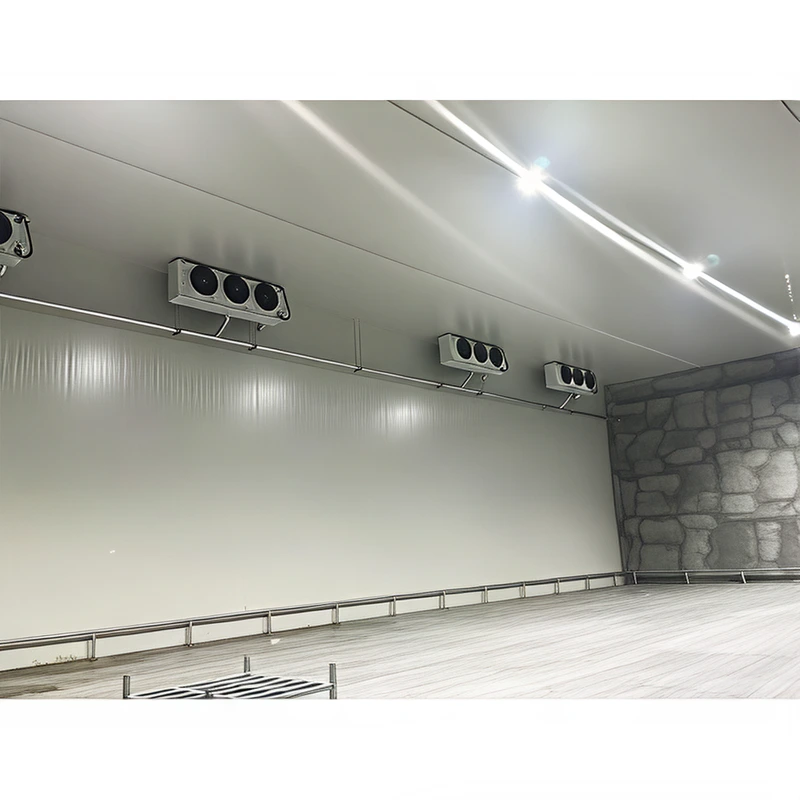
Introduction to R410 Refrigerant Cold Storage
Core Refrigerant
Core Advantages of R410
As an efficient and environmentally friendly mixed refrigerant (composed of R32 and R125 in a 1:1 ratio), R410 is the mainstream choice for medium and high-temperature cold storage. It is especially suitable for small and medium-sized cold storage, commercial cold storage, and conventional low-temperature storage scenarios that have high requirements for refrigeration stability, environmental protection, and safety. It is one of the most widely used medium and high-temperature refrigerants in the cold chain industry. Its core advantages are in line with industry practices, as follows: First, it boasts excellent refrigeration efficiency, stable condensing pressure, and outstanding heat exchange performance, which can quickly reach the set storage temperature and maintain it accurately, effectively reducing operational energy consumption. It is suitable for the full medium and high-temperature refrigeration range of -25℃ to +15℃, and its refrigeration efficiency is optimal especially in the temperature range of -18℃~+5℃, which is fully suitable for conventional cold storage needs.
Second, it meets environmental protection standards, with an ODP (Ozone Depletion Potential) of 0 and a GWP (Global Warming Potential) of about 2088, complying with the current green and low-carbon development trend and environmental compliance requirements. It is the mainstream choice for replacing traditional high-GWP refrigerants (such as R22) and is widely used in various scenarios with high compliance requirements. Third, it features stable and reliable operation, with stable chemical properties, no corrosion, no flammability or explosion risks, high safety in use, smooth system oil return, no obvious oil return issues, and low maintenance costs. It significantly reduces customers' comprehensive costs during long-term operation, which is consistent with the core demand for the long-term stable operation of cold storage. Fourth, it has mature and extensive applications. The application technology of R410 refrigerant in cold chain logistics, food processing, pharmaceutical storage, commercial cold chain, and other fields is well-developed. Operators can get started easily, making it suitable for various medium and high-temperature storage scenarios without the need for additional investment in a large amount of technical training costs. At the same time, we have optimized the system design according to the characteristics of R410 to further improve refrigeration efficiency and operational stability, ensuring the long-term safe and efficient operation of the cold storage.
key feature
Multi-Temperature Zone Customization: Adapting to Storage Needs of Different Goods
Combined with the storage characteristics of different goods, we divide the cold storage into three core temperature zones (the R410 refrigeration system is suitable for the medium and high-temperature range and does not support ultra-low temperature storage). Each temperature zone is equipped with polyurethane insulation panels of exclusive specifications to ensure stable and accurate storage temperature, maximize the shelf life of goods, guarantee the quality of goods, and meet the actual storage scenarios of the industry.
Standard Freezing Storage (-18℃~-25℃)
• [Applicable Goods]
This is the most widely used temperature zone, mainly used for storing meat, quick-frozen pasta, seafood, frozen prepared food, etc. Among them, the maximum shelf life of meat can reach 12-24 months, and that of seafood can reach 9-12 months. The energy consumption benchmark is ≤ 0.8 kWh/m³·day (a conventional benchmark value for medium-sized cold storage in the industry; it is slightly higher for small cold storage due to the high heat load ratio and slightly lower for large cold storage due to the scale effect). The R410 refrigeration system can further reduce energy consumption by 5%~10%, which is in line with the industry's energy-saving needs.
• [Specifications of Polyurethane Insulation Panels]
Adopt 150mm~200mm thick polyurethane insulation panels (the lower the storage temperature, the thicker the panel). The closed-cell rate is ≥ 90%, and the thermal conductivity is ≤ 0.024W/(m·K). The panels have passed the -30℃ low-temperature test without deformation or cracking, which can effectively maintain the stability of the storage temperature, reduce cold loss, and have good sound insulation and moisture resistance to prevent goods from getting damp and smelling, meeting the actual operational needs of freezing storage.
Refrigerated Storage (Divided into Low-Temperature Refrigeration and High-Temperature Refrigeration)
• Low-Temperature Refrigeration (-2℃~+4℃)
Suitable for chilled meat, pasteurized milk, pharmaceutical reagents (2~8℃, which need to be stored in independent storage units), etc. The humidity is controlled at 85%~95% RH to prevent goods from losing water and deteriorating; the storage of pharmaceutical reagents requires an additional uninterrupted temperature and humidity monitoring and backup system. The R410 refrigeration system can achieve precise temperature control in the temperature zone to meet the compliant storage requirements of the pharmaceutical industry.
[Specifications of Polyurethane Insulation Panels]: Adopt 120mm~150mm thick polyurethane insulation panels with a closed-cell rate ≥ 90% and a thermal conductivity ≤ 0.024W/(m·K). It has excellent moisture resistance, which can effectively avoid condensation in the storage and ensure that the goods storage environment meets the standards, meeting the needs of low-temperature refrigeration scenarios.
• High-Temperature Refrigeration (+5℃~+12℃)
Suitable for tropical fruits (such as bananas at 11℃~13℃, mangoes at 8℃~10℃), chocolate (10±1℃), red wine (12-14℃), etc. It is necessary to accurately control the temperature and humidity to prevent goods from rotting, deteriorating, or changing taste; red wine storage requires additional vibration isolation and light-proof treatment, and fruit storage needs to be equipped with a ventilation system to inhibit ethylene accumulation. The R410 refrigeration system can achieve linkage control of temperature and humidity, reducing the impact of temperature fluctuations on goods.
[Specifications of Polyurethane Insulation Panels]: Adopt 75mm~100mm thick polyurethane insulation panels with a closed-cell rate ≥ 88% and a thermal conductivity ≤ 0.025W/(m·K). It is light in weight and easy to install, with good thermal insulation performance, which can accurately maintain the stability of the storage temperature and reduce energy consumption, adapting to the operational needs of high-temperature refrigeration scenarios.
Special Temperature Zone Storage (Controlled Atmosphere Storage, Constant Temperature and Humidity Storage, Buffer Room)
• Controlled Atmosphere (CA) Storage (-1℃~+15℃, adjusted according to products) Suitable for storing fruits and vegetables such as apples and blueberries. The shelf life of fruits and vegetables can be extended by adjusting the O₂ and CO₂ concentrations in the storage (for example, the O₂ concentration for apples is 1.5%~2%, and the CO₂ concentration is 1%~3). It is equipped with 100mm~150mm thick polyurethane insulation panels to ensure the stability of the storage temperature and gas concentration; the controlled atmosphere storage needs to be linked with the R410 refrigeration system to reduce the impact of gas concentration fluctuations on the refrigeration effect through precise temperature control, and avoid condensation in the storage from damaging fruits and vegetables, meeting the actual needs of the fruit and vegetable preservation industry.
• Constant Temperature and Humidity (CTH) Storage (temperature accuracy ±0.5℃, humidity accuracy ±3% RH): Suitable for film archives, Chinese medicinal materials, precision instruments, etc. It adopts 100mm~120mm thick polyurethane insulation panels, combined with a dedicated temperature and humidity control system to ensure that the storage environment meets the standards accurately, in line with the actual requirements of precision storage scenarios.
• Corridor Buffer Room (freezing storage anteroom at -5℃~0℃, refrigerated storage anteroom at +8℃~+12℃): Used to reduce cold loss when opening doors, saving 15%~30% of energy. It adopts 100mm thick polyurethane insulation panels to adapt to the temperature fluctuation needs of the buffer room, avoid energy increase caused by cold loss, and comply with the energy-saving specifications for cold storage operation.
Summary of Overall Advantages
Our company's R410 refrigerant cold storage takes R410 high-efficiency and environmentally friendly mixed refrigerant as the core, with the advantages of environmental protection, high efficiency, safety, and economy, complying with the national green cold chain development orientation and the actual needs of the refrigeration industry; the multi-temperature zone design combined with suitable polyurethane insulation panels meets the storage needs of various goods and guarantees the quality of goods; the integration of the intelligent monitoring platform and the AI intelligent defrosting system solves the pain points of traditional cold storage management and realizes management upgrading and energy saving and consumption reduction; the full-process customized services accurately adapt to the personalized needs of different customers and are widely used in food processing, cold chain logistics, medical storage, fresh e-commerce, commercial cold chain, scientific research, and other fields, providing customers with safe, efficient, and worry-free medium and high-temperature storage solutions that conform to the development trend of the refrigeration industry and the actual operational needs of customers.